Understanding a difficult-to-treat pathogen
Melioidosis is a potentially fatal infectious disease caused by Burkholderia pseudomallei, a bacterium commonly found in tropical regions. Treatment is long and often requires months of antibiotics, yet resistance has already been reported in clinical isolates.
As a result, researchers are exploring a new strategy: disarming the bacterium rather than simply killing it. One promising strategy is to target proteins that help the pathogen establish infection and survive inside the host.
The focus of this study is Trigger Factor (TF), a molecular chaperone protein that facilitates proper protein folding. While TF has been linked to virulence in other bacteria, its importance in B. pseudomallei remained largely unexplored.
Removing Trigger Factor to reveal its role
To investigate TF's function, the team created a genetically modified strain lacking the tig gene, which encodes the Trigger Factor.
They then compared this mutant strain (Δtig) with the normal bacterium through a series of experiments designed to evaluate:
- Host cell infection
- Cell-to-cell spread
- Bacterial motility
- Resistance to environmental stress
- Biofilm formation
- Production of virulence-associated surface structures
The most striking result was that the mutant bacteria were almost unable to enter host cells.
To understand why this happened, the team performed large-scale proteomic analysis to map all the proteins in the bacterium and determine how the absence of Trigger Factor altered protein expression throughout the cell. This analysis revealed that many essential proteins were either missing or severely reduced—particularly those involved in host interaction and bacterial survival.
Uncovering how Trigger Factor protects proteins
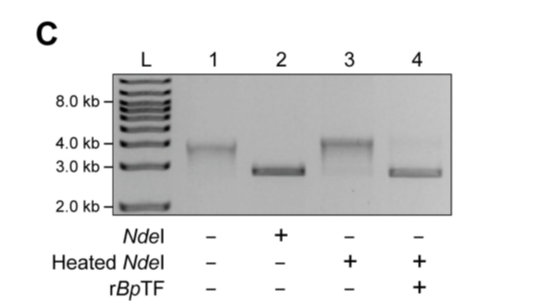
To confirm that Trigger Factor truly acts as a protective shield for other proteins, the team designed a clever experiment. They produced pure Trigger Factor protein in the laboratory (called rBpTF—a manufactured version they could work with easily). They then took an enzyme and exposed it to extreme heat—conditions that would normally destroy it. However, when they added the rBpTF protein, the protein acted like a protective shield, preventing the enzyme from breaking down and keeping it functional.
This experiment, visualized using the Alliance Q9 Advanced imaging system, demonstrated that rBpTF has the ability to protect and preserve the function of other proteins even under harsh conditions. This protective capability explains how the loss of Trigger Factor disrupts so many different bacterial functions at once.
A bacterium that struggles to infect
The team discovered that the Δtig mutant showed major defects in both adhesion and internalization, reducing host cell entry to just 0.19% compared to wild-type.
This reduced infectivity was accompanied by dramatically lower cytotoxicity—the formation of multinucleated giant cells (characteristic of B. pseudomallei infection).
Through large-scale proteomic analysis, researchers found that multiple proteins involved in adhesion, invasion, and secretion systems were significantly altered in the absence of Trigger Factor. This indicated that a single protein influences multiple virulence pathways simultaneously.
Trigger Factor also supports movement and stress survival
Successful pathogens must not only infect cells but also survive hostile environments.
The modified bacterium also displayed a loss of motility, swimming nearly three times less efficiently than the wild-type bacterium.
It was also significantly more vulnerable to several forms of stress:
- Acidic conditions
- Oxidative stress
- Heat stress
Together, these findings suggest that Trigger Factor acts as a central coordinator of bacterial fitness and survival.
A promising target for future therapies
The study demonstrates that Trigger Factor plays a much broader role than previously thought.
Its absence disrupts bacterial adhesion, invasion, motility, stress resistance, cytotoxicity, and surface polysaccharide production. Rather than affecting a single pathway, Trigger Factor appears to influence a broad network of virulence mechanisms.
Future work will focus on identifying compounds capable of inhibiting Trigger Factor and determining whether this strategy can be translated into effective therapies against this highly resilient pathogen.
Results at a glance
Glossary
Chaperone Protein
A protein that assists other proteins in folding correctly and maintainingtheir proper structure.
Proteomic Analysis
The large-scale study of all proteins producedby a cell or organism.
Cytotoxicity
The ability of a substance or organism to damage or kill cells.
Adhesion
The ability of bacteria to attach to host cells before infection begins.
How rBpTF Protein Shields Enzymes from Heat Damage
The following gel image was taken with our Alliance Q9 Advanced. It shows a test that demonstrates the protective function of the B. pseudomallei Trigger Factor protein. The protein was able to protect an enzyme from being damaged by heat, allowing it to still work properly (Bendo et al., 2026).

Sales Director